
Heading to Tokyo with Companions of Different Ages and Energy Levels: Choosing When to Go and Fitting in a Street Kart Tour, One Decision at a Time
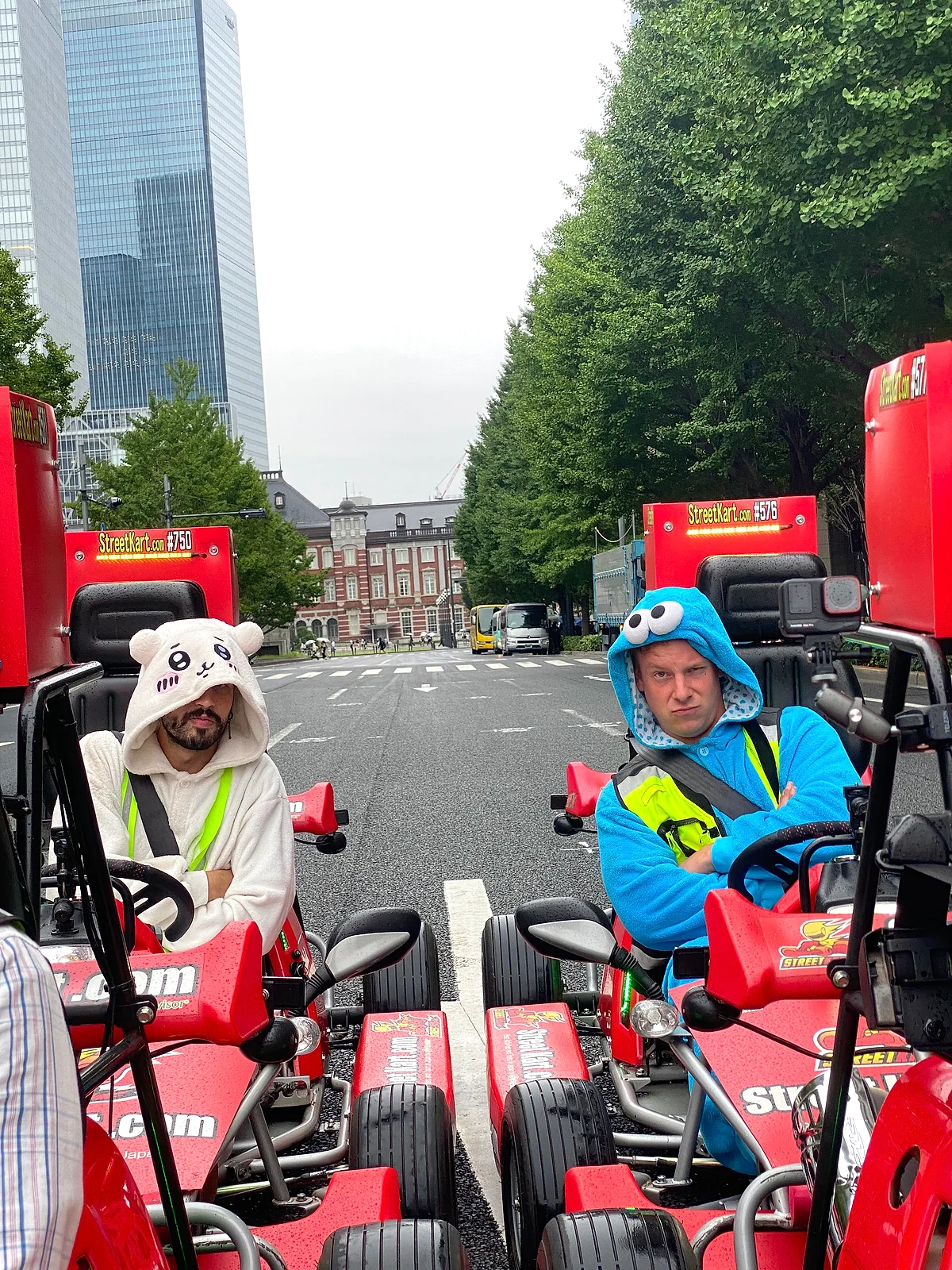
Heading to Tokyo with Companions of Different Ages and Energy Levels: Choosing When to Go and Fitting in a Street Kart Tour, One Decision at a Time
"So, when are we going?"
You hit send, and for a while the only thing that changes is the "read" count. It happens in group chats all the time.
One person can't wait to get behind the wheel. Another's knees start complaining after a long walk. Someone else just can't handle the heat. When your travel companions span different ages and energy levels, you can feel a little worn out the moment you open the calendar.
Even so, if you decide the order in which to think things through, narrowing down when to visit Tokyo turns out to be easier than you'd expect. This article starts with "who wants to do what," then goes step by step through the season, the day of the week, choosing a location, pacing everyone's energy through the day, and what to check before booking. Along the way, we'll also cover how to think about fitting a Street Kart tour, which takes you through Tokyo's streets in a go-kart on public roads, into your trip.
Step 1: Before the calendar, decide who will drive and who will wait
If you start with dates, you'll usually get stuck partway through. The first thing to do is lay out what each member of the group wants to do and what they're able to do.
There's one thing you should know up front: the street karts are single-seaters. It's one person per kart, and nobody can ride behind someone else. So you need to decide early whether everyone will drive, or whether the group will split into those who drive and those who spend that time somewhere else.
There are requirements for driving. The license you need depends on your country and license type, so check the official website for details. It's also wise to confirm other conditions, such as age, before you start planning the trip. If you leave this for later, you might find out after setting the dates that "this person can't drive after all," and that deflates the mood of a trip more than you'd think.
There are also physical considerations worth knowing in advance. The karts have no suspension, so every bump in the road goes straight through to your body. For that reason, participation is not recommended for people who are pregnant. If you have concerns, consult a doctor beforehand. If anyone in the group has back or knee issues, I'd suggest sharing this information with them and deciding together whether they'll drive.
If some members won't be driving, this is also the stage to think about how they'll spend that time. Honestly, whether the trip will be comfortable and enjoyable for everyone is largely decided right here. If the plans for those waiting stay vague, they end up standing around outside the shop with nothing to do. We'll list specific places to spend time near each location in a later step.
Step 2: Get to know Tokyo's character in each season
Once you have a sense of everyone's circumstances, the next thing is the season. If you choose when to visit Tokyo based only on how crowded it is, you may end up with a few regrets. You'll want to weigh three things together: heat, rain, and how the scenery changes.
The karts have no roof, and you sit low to the ground. The wind, the sounds of the city, and the sunshine all reach you directly. That's part of what makes it fun, and it's also why the experience feels so different depending on the season.
In spring, the whole city gets restless with cherry blossom talk. But bloom times shift from year to year, so it's best to leave some flexibility in your schedule.
From early summer into summer, a stretch of rainy weather is followed by intense heat. If anyone in your group has concerns about stamina, be careful here. If you're driving in summer, bring sunscreen and something to drink. Then there's September. Even if it's technically autumn, some years the midsummer heat lingers. It's safer to leave behind the assumption that "September will surely be cool."
How tours are handled on rainy days is explained in the weather policy on the official website. Reading it once before you finalize your itinerary will save you from scrambling on the day.
Here's a brief look at what it says. In light to moderate rain, tours go ahead as scheduled and raincoats are provided free of charge. In heavy rain or a typhoon, tours are canceled, and you can choose between joining a shortened tour and receiving a refund for the difference, switching to another day, or canceling for a full refund. Longer courses may also be shortened. If you're planning a trip during the rainy season or when typhoons are likely, avoid putting the tour on the last day of your trip so you still have room to move it to another day.
November in Tokyo is a popular season for travel, as the heat settles down and the roadside trees begin to change color. The tour route from the Shibuya location includes Omotesando, known for its avenue of zelkova trees. How far the autumn colors have progressed varies by year, so I can't say "it'll definitely be colorful in November." Still, for anyone who wants to feel the season changing through the scenery, November is a time I'd love to recommend.
Winter is cold. Since the vehicle has no roof, it'll feel even colder. In exchange, the night views are wonderful. The Rainbow Bridge, on the route from the Tokyo Bay location, is lit up in seven colors at night. The Christmas illumination on Omotesando is also a well-known photo spot. Whether tours are available after dark depends on the location and the time of year, so check the official website.
If anyone in your group dislikes the cold, winter also makes it easy to split up: those who drive go out on the karts, while those who wait spend the time somewhere warm indoors.
Step 3: Choose the day of the week, and book weekends early
Once the season is set, the next thing is the day of the week. This part is simple: weekends fill up quickly. If you want to drive on a weekend, we recommend booking early.
If many in your group can take time off on weekdays, consider scheduling the tour on a weekday.
On the other hand, if someone can't take weekdays off, you can build the trip around a weekend and lock in the tour reservation first. Before booking flights and accommodation, check whether there's availability on the day you want to drive. Just switching the order of those steps makes it easier to avoid the disappointing scenario of "we got the hotel, but the karts are fully booked."
When finalizing your dates, also take a look at the Japanese calendar.
Step 4: The location you choose changes the Tokyo you see
Street Kart has nine locations nationwide, seven of which are in Tokyo. However, Akihabara's first and second locations are in almost the same place, as are Shibuya and Shibuya Annex. So it isn't a matter of "choosing from seven areas of Tokyo"; be careful not to get that wrong.
Tours are led by a guide, and each location has its own set course. You don't pick whatever roads you like. That's exactly why the location you choose clearly changes which side of Tokyo you'll see on your trip.
Shinkiba is in the area along Tokyo Bay, and its route includes the Rainbow Bridge with Tokyo Tower in the distance: a 798-meter suspension bridge and a 333-meter red-and-white steel tower. The waterfront roads offer wide views, and the sky you look up at from the low seat feels wide too. The breeze off the bay hits you right in the face.
For members who won't be driving, Kasai Rinkai Park, about 15 minutes by car from the location, has a giant Ferris wheel and an aquarium.
The Akihabara tour route includes the red-brick Marunouchi building of Tokyo Station, which opened in 1914, Ginza with the Wako clock tower, and Akihabara's Electric Town. A station building more than a century old and streets packed with signs are connected along a single route. That contrast is what gives this route its character.
Near the location, Kanda Myojin is about a 10-minute walk away. It's a shrine long regarded as a guardian of Edo, and those waiting can take their time visiting it. Ueno Park, about five minutes by train, is home to Ueno Zoo and the Tokyo National Museum. For members who walk at a slower pace, one approach is to pick just one destination in Ueno.
The Shibuya tour route includes the Shibuya Scramble Crossing, Harajuku's Takeshita Street, and Omotesando. Zelkova trees in autumn, illuminations in winter: the highlight of this route is driving along streets whose character changes with the seasons.
The Hachiko statue, about a 10-minute walk from the location, is perfect for a commemorative photo before the tour. You could also look down on the crossing from Shibuya Sky, the observation deck at Shibuya Scramble Square (about a 10-minute walk). Meiji Jingu and Yoyogi Park are about a 20-minute walk away, which may be a bit far for anyone who finds walking difficult. In that case, talk about how to get there ahead of time.
The Shinagawa route includes the high-rises around Shinagawa Station, the Rainbow Bridge seen from the Shinagawa side, Tokyo Tower in the distance, and the Takanawa area, home to Sengakuji Temple.
Shinagawa Shrine, about a five-minute walk from the location, has a Fujizuka, a miniature Mt. Fuji. Tennozu Isle, about a 20-minute walk away, is an area with cafés and galleries lining the canals, well suited to a leisurely stroll after the tour.
None of the locations have parking. Plan on using public transportation, and check the distance from the nearest station. For example, the Shinagawa location is about a three-minute walk from Keikyu's Kita-Shinagawa Station, and the Shibuya location is about a five-minute walk from Shinsen Station. If anyone in your group wants to keep walking to a minimum, those few minutes are worth remembering.
Step 5: Where in the day to spend your energy
Once the dates and location are set, think about what the day will look like. What you're deciding here isn't the times, but where to spend your energy.
Driving a kart takes more concentration than you'd expect. You're taking in the scenery, watching the guide's signals, and paying attention to the cars around you. So it's best not to cram a lot of walking into your schedule before the tour. If you spend the morning walking all over Ueno, go straight to the tour, and then go shopping at night, even the younger members will have gone quiet by evening.
I'd suggest building in time to sit and rest either before or after the tour. Near the Shinagawa location there's Starbucks Shinagawa Grand Commons, and near the Akihabara location there's Starbucks Akihabara Ekimae. Each location also has restrooms, so you can take care of that before heading out.
Clothing and luggage also affect how you plan the day. Choose closed-toe shoes such as sneakers, and avoid sandals, heels, skirts, and dresses. You can only bring about a small bag on the kart, and the lockers at the location are for small items. They're not suited to large luggage like suitcases. If your tour falls on your arrival or departure day, plan to drop off your bags at your hotel or elsewhere before heading to the location.
Plan the time for those waiting the same way. Choose a place where it's easy to meet up around the time the tour ends. Low-key plans that don't involve much travel, like "wait at a café near the location" or "visit a shrine and come back," work best.
And a word about photos. Please don't use your phone while driving. Keep your eyes forward and your hands on the wheel. That's what matters most. The tour includes stops for taking photos, and before and after, there are places where you can take pictures at your leisure, such as in front of the Hachiko statue or along the canals of Tennozu Isle.
Step 6: What to check before booking
Finally, here's what to check before booking. Being thorough here makes the morning of the tour much calmer.
First, the requirements for drivers. Check the license, age, and other requirements for each member on the official website. "It's probably fine" is the most dangerous assumption.
Next, cost. Prices vary by season and time slot, so check the official website for the latest rates. Looking at them once before setting your travel budget saves you from having to recalculate later.
Then there's how tour groups are put together. Before planning around the assumption that your group can drive on its own, check the official website for details.
The language of the guidance is also worth confirming. On the day, tours are generally conducted in English. Guidance in Japanese or other languages depends on the staff that day and can't be guaranteed. If you're worried about the language, get in touch through the official website beforehand. The official website is available in 22 languages.
It's also a good idea to share the day's flow with your companions. When you arrive at the location, you check in and then receive a safety briefing. After hearing about how to operate the kart, the route, and points to watch out for, you set off behind the guide. Let any members who are nervous about driving know this sequence in advance. Follow the meeting time given when you book, and arrive at the location with enough time for check-in and the briefing.
As for weather, as mentioned in an earlier step, reading up on how rainy days are handled will give you peace of mind.
Facebook, LINE, and email are listed as ways to book. Check the official website for the latest contact information. Weekends fill up quickly, so if you want to drive on a weekend, move this step much earlier in your trip preparations.
Once the order is set, the Tokyo trip comes together
Let's trace the flow one more time. First, decide who will drive and who will wait. Next, consider the character of each season, along with the heat and cold. Choose the day of the week and pick a location. Look at where in the day you'll spend your energy, and finally, confirm the requirements and make your booking.
If you go in this order, even a group with mixed ages and energy levels can get closer to a schedule where everyone says, "I'm glad we came." Will it be the zelkova trees of Omotesando in November, or the Rainbow Bridge glowing in seven colors on a winter night? From there on, even the deliberating becomes part of the fun.
Once a few candidate dates come into view, start by looking over the requirements and tour details on the official website together. And once you've decided on the day you want to drive, get in touch early.
The next thing to pop up in that group chat will surely be a date.
This article was originally written in Japanese and translated using AI. Some expressions may read unnaturally, and we appreciate your understanding. For the most accurate and up-to-date information, please refer to the official site at kart.st.
Street Kart is not affiliated with Nintendo or the Mario Kart series in any way. We do not provide costumes of Nintendo characters, and such costumes may not be worn during tours even if brought by participants.