
Conquer Tokyo’s Specialty Shops! A Souvenir Shopping Guide by Street Kart
Why is choosing souvenirs in Tokyo so impossibly hard? Station shops, department store basements, shopping streets, specialty stores—there are so many options that you end up just grabbing a box of Tokyo Banana and calling it a day, right? Friends are always asking me, “What should I get as a Tokyo souvenir?” and honestly, it’s tough to answer. But recently, I discovered an incredibly efficient way to hit up Tokyo’s specialty shops. The trick? Cruising through Tokyo’s streets on a street kart while hitting up shopping areas—a slightly unconventional approach. This method gives you the best of both sightseeing and shopping, and seriously, you’re missing out if you don’t know about it.
Tokyo’s Specialty Products Are Surprisingly Deep
What comes to mind when you think of Tokyo specialties? The truth is, Tokyo has an astonishingly rich variety—from traditional crafts made by local artisans to sweets from long-established shops and the latest trendy treats.
Take the Asakusa area, for example. Beyond the Kaminarimon gate, Nakamise-dori is lined with shops that have been around since the Edo period. Amid the sweet aroma of ningyo-yaki (doll-shaped cakes), the tenugui specialty shop “Fujiya” has an entire wall covered with hand-dyed Edo tenugui, each one crafted by artisans. Japanese tenugui are both practical items and works of art. The intricate designs are so stunning that many people hang them on walls as decor. They’re light and compact, making them perfect souvenirs.
Head over to Ginza, and you’ll find an area packed with prestigious Japanese confectionery shops. The monaka from “Kuya” is famously impossible to buy without a reservation. That elegant sweetness of the red bean paste packed inside those delicate thin wafers—once you’ve tried it, you’ll never forget it. The name “monaka” actually comes from an old Japanese word “mochū no tsuki,” meaning “full moon.” Sharing little tidbits like this along with your souvenirs makes people really happy.
Then there’s the Nihonbashi area, home to legendary shops that have shaped Japan’s food culture—like “Yamamoto Nori” for seaweed and “Ninben” for bonito flakes. This neighborhood has been a commercial hub since the Edo period, and it’s not unusual to find shops with over 400 years of history. Tokyo’s specialty products aren’t just “souvenirs”—they’re Edo culture itself.
Street Kart: A Whole New Way to Experience Tokyo
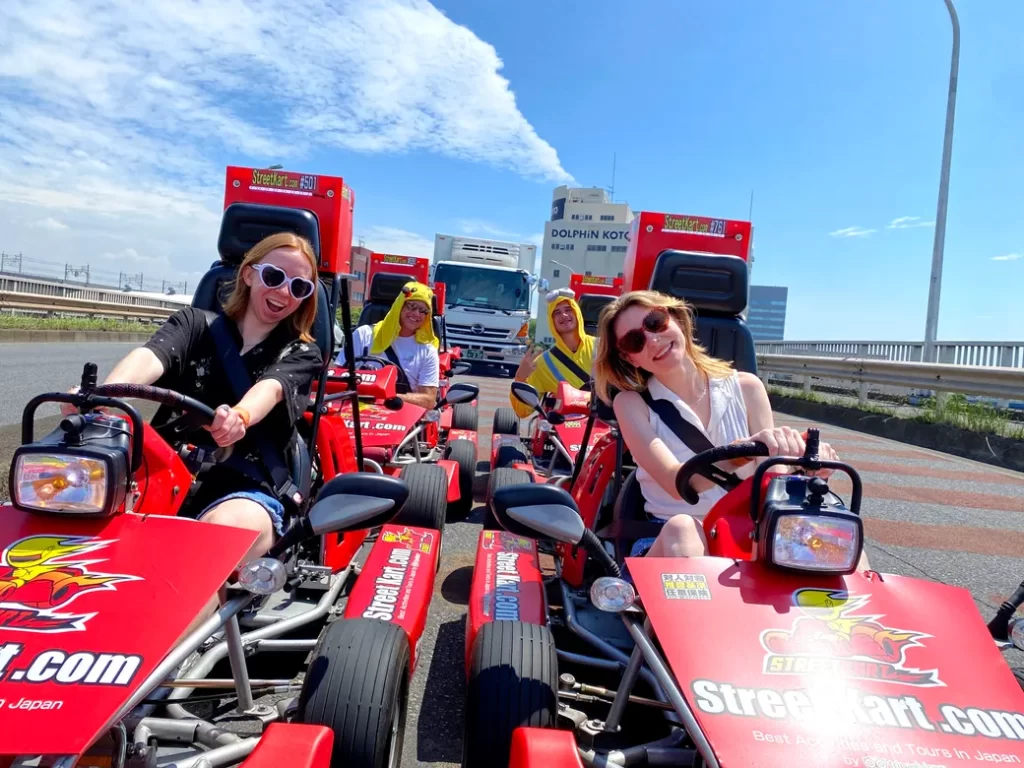
If you want to make your Tokyo specialty shop tour even more special, combining it with a street kart experience is an absolute must. Cruising through Tokyo’s public roads at a low vantage point on a guide-led tour gives you a sensation you simply can’t get from a taxi or train.
The sounds of the city blending with the engine’s hum, smartphone cameras pointed at you from pedestrians at red lights, sunlight streaming between buildings—this low perspective transforms Tokyo’s streets into an entirely different landscape. Feeling the wind on your fingertips as you grip the steering wheel, shop signs on streets and back alleys you’d normally just pass by suddenly jump into sharp focus. This experience is, to put it mildly, absolutely incredible.
Tour routes sometimes pass near landmarks like Tokyo Tower and Asakusa’s Kaminarimon. If you work in some shopping at specialty stores before or after your tour, you’ll have an amazingly packed day of Tokyo sightseeing. There’s something magical about how excited you get about souvenir shopping after feeling the city’s atmosphere firsthand from a kart. You find yourself naturally planning your shopping like, “Let’s go to that shop on the street we drove past earlier!”
Street Kart has conducted over 150,000 tours and welcomed more than 1.34 million customers, making it one of Japan’s largest street kart operators. An average rating of 4.9/5.0 speaks volumes about the quality of the experience. Booking is easy through kart.st, so try working it into your specialty shop tour itinerary.
The Complete Area-by-Area Guide to Tokyo’s Specialty Shops
Asakusa & Skytree Area Highlights
Asakusa is a treasure trove of Tokyo specialties. Nakamise-dori alone offers a lineup of beloved treats from the Edo era—ningyo-yaki, kaminari-okoshi (thunder crackers), and age-manju (fried buns). But the real hidden gems for connoisseurs are found on “Denpoin-dori” and “Shin-Nakamise-dori,” just beyond Nakamise.
“Funawa’s” imo-yokan (sweet potato jelly) is an absolute classic Tokyo souvenir. The natural sweetness of sweet potato packed into every bite makes it simple yet refined—that’s the secret to its popularity. While sweet potato sweets exist all over Japan, Funawa’s imo-yokan stands out for its simplicity, with nothing unnecessary added. Sweets that let the quality of ingredients shine through are actually the hardest to make.
Heading from Asakusa toward Skytree, you’ll find select shops in Solamachi that carry Tokyo’s finest specialty products. Items like Edo Kiriko cut glass and Tokyo Some-Komon scarves—traditional crafts given a modern twist—are absolutely stunning. That photo of an Edo Kiriko glass catching the light? Post it on Instagram and watch the likes pour in.
Ginza & Nihonbashi Area Treasures
Ginza is where you find “sophisticated souvenirs.” Japanese sweets from “Ginza Akebono,” cheesecake from “Shiseido Parlour”—this area is full of items that’ll earn you a “Great taste!” when you give them as gifts.
“COREDO Muromachi” in Nihonbashi has an entire floor dedicated to the finest products from all across Japan, where you can check out not just Tokyo specialties but treasures from every region in one go. It’s the perfect spot for anyone short on time but looking for quality souvenirs. Regional antenna shops like “Nihonbashi Shimane-kan” and “Mie Terrace” are also scattered around the Nihonbashi area—the fact that you can get specialty products from all over Japan while in Tokyo is one of the city’s greatest perks.
Here’s an important tip: weekday mornings are the sweet spot for the Ginza-Nihonbashi area. Weekends get crowded, and popular items can sell out by afternoon. Whether you do a quick shopping run before your morning kart experience or leisurely browse shops after an afternoon tour, how you plan your schedule makes all the difference.
Akihabara & Ueno Area Hidden Gems
Akihabara might be synonymous with anime and figurines, but it actually has an impressive selection of snack and candy specialty shops too. “Niki no Kashi” is a wonderland of Japanese treats packed wall-to-wall. It’s become a social media sensation as “Tokyo’s candy paradise” and is hugely popular with tourists. Limited-edition Japanese flavors of KitKat and Pocky and other goodies that’ll make your overseas friends go crazy—there’s a mountain of them here.
Move over to Ueno, and Ameyoko shopping street awaits. Dried goods, spices, chocolate, cosmetics—this street is packed with absolutely everything and embodies Tokyo’s beautiful chaos. Some shops even let you haggle, giving you a taste of that old-school market energy. Note that this area is separate from the street kart tour routes, so plan to visit before or after your tour.
Why People Choose Street Kart
Among the street kart experience operators in Tokyo, there are solid reasons why Street Kart has earned the trust of so many tourists.
First, there’s the peace of mind that comes from having guides trained specifically for international drivers. Driving on Tokyo’s public roads is nerve-wracking even for Japanese people, let alone first-time foreign visitors. Street Kart’s guides communicate in English, providing thorough support from traffic rule explanations to route guidance. Many past participants have said, “Having a guide made it easy to relax and enjoy the ride.”
Then there’s the impressive average rating of 4.9/5.0 across over 20,000 reviews. These numbers reflect the genuine satisfaction of people who’ve actually done it. With a fleet of over 250 vehicles and 8 locations—6 in Tokyo plus Osaka and Okinawa—the scale of operations also inspires confidence.
The fact that the website supports 22 languages is another huge plus. Thanks to this multilingual support, tourists from all over the world can book smoothly and check information in their native language. That said, the actual service is provided in English, so having basic English communication skills will help you enjoy the experience even more.
Regarding driver’s licenses, there are requirements such as an international driving permit, so be sure to check the details on kart.st’s license information page. Checking in advance means no last-minute panic on the day. For other service information, visit the official kart.st website.
Tips for Getting the Most Out of Your Souvenir Shopping
Efficiently hitting up Tokyo’s specialty shops requires a bit of strategy. First, department store basements (depachika) have time sales in the evening. Japanese sweets and prepared foods sometimes get marked down, so stopping by after an evening kart experience is a great move.
Since your bags will get heavier, it’s smart to use coin lockers near your hotel or Yamato Transport’s delivery service. Lugging heavy bags while sightseeing is exhausting and can ruin your Tokyo adventure. Mitsukoshi in Nihonbashi and Matsuya in Ginza even offer services to ship your purchases to the airport.
About payment methods: more and more of Tokyo’s specialty shops accept cashless payments. In tourist areas like Ginza and Asakusa especially, most large stores take credit cards and various electronic payment methods. However, some traditional old shops and small specialty stores are cash-only, so carrying some cash is always a good idea. Many stores also offer tax-free shopping, so don’t forget to carry your passport.
From a social media perspective, many Tokyo specialty products have absolutely gorgeous packaging. The yokan boxes from “Toraya,” the designer tins of Fugiyose from “Ginza Kikunoya,” the colorful packaging from “Mamegen”—just line them up and snap a photo for an instant hit. Hashtags like #TokyoSouvenirs, #TokyoSpecialties, and #JapanSouvenirs will help your posts reach other people hunting for souvenirs in Tokyo.
Make the Most of Your Tokyo Day with Kart + Shopping
The beauty of Tokyo sightseeing is that you can pack in “seeing,” “eating,” “buying,” and “experiencing” all in one day. Feeling the city firsthand on a street kart tour, then diving into specialty shops while that excitement is still fresh—this flow is what transforms ordinary sightseeing into an “unforgettable trip.”
Souvenirs chosen while reminiscing about the Tokyo streets you drove through will carry a special story. Being able to share your own personal Tokyo episodes when handing over gifts—”The view at that intersection was amazing” or “I loved the vibe of that street”—that’s what makes it special.
Tokyo’s specialty products span a wide range—Japanese sweets, crafts, food items, and accessories. No matter what you choose, each one genuinely captures the essence of Tokyo. If you can’t decide, just go with what you actually tried and found delicious, or what made you think “That’s adorable!” when you picked it up. Trust your instincts.
Start by checking street kart availability at kart.st and plan your shopping from there. Weekends fill up fast, so weekdays are your best bet. Racing through Tokyo’s streets and finding the perfect souvenirs—once you’ve experienced this combo, you’ll definitely want to do it again.
A Note About Costumes
We do not offer rental of Nintendo or “Mario Kart” related costumes. We only provide costumes that respect intellectual property rights.

